
Templates in Scaling Tables - Preview
Templates can be applied once to quickly stand up a best-practice analysis for a single asset through the Tools Pane. This workflow scales Templates across thousands of assets via Scaling Tables for Enterprise+ users.
Creating a Template
Start by creating calculations in a Scaling Table. Any calculation (using existing Seeq Tools, Formula operators, UDFs, etc.) can be packaged as part of Template logic. Once best practice calculations have been created and validated to solve a specific need, create a new Template.
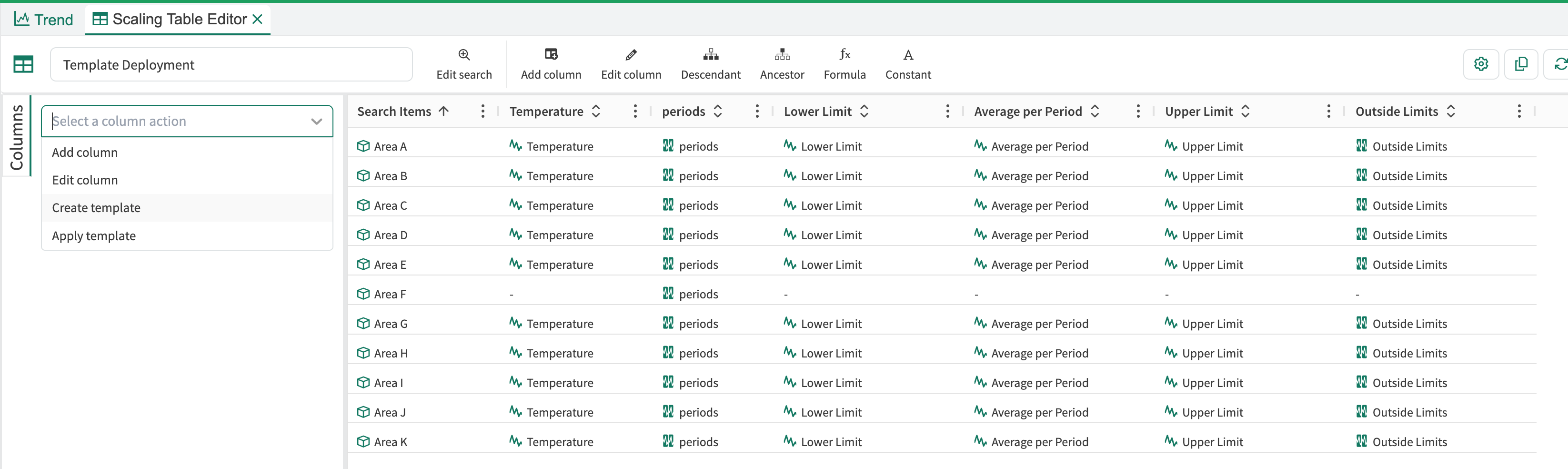
When creating a Template, provide a Name and Description that indicate what the Template does and what use cases it can be used to solve. Then, by selecting calculated items columns as outputs, the inputs will automatically populate. During this creation step, the Template is encompassing the entirety of the calculation hierarchy, and the inputs will be the raw tags required for all of the intermediates and outputs. Once the inputs are identified, provide common names and descriptions that will be used in the new Templates apply pane for future use. Once the Template is ready, it can be saved and then applied.
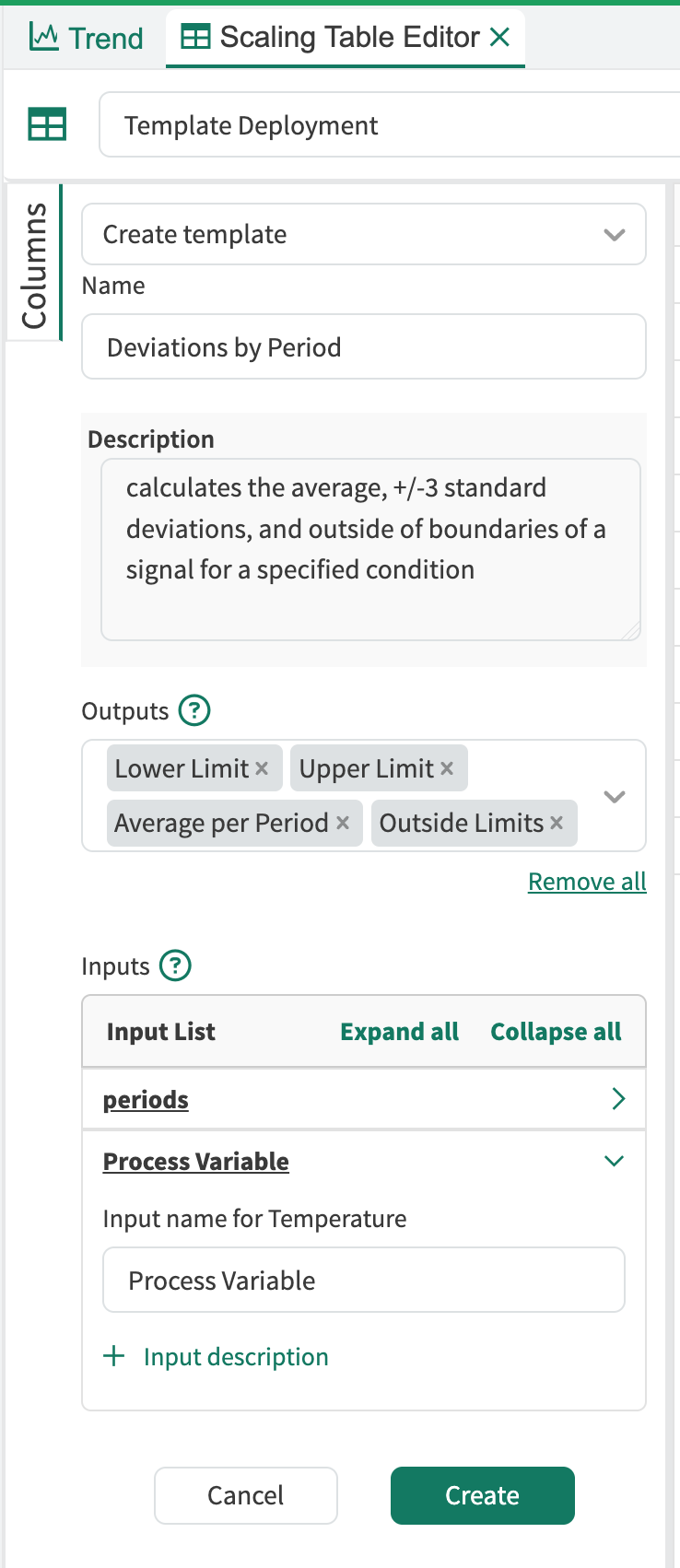
Example Template creation from a Scaling Table.
Name: provide a name for the new Template being created.
Description: provide information about the Template so that future users can determine if it is the right tool to solve their use case
Outputs: when selected, the logic from all of the output columns is used to create any intermediates and find the required inputs.
Inputs: signals, scalars, or conditions required to execute the Template. Provide a more common/friendly name so that users in the future know what to provide for each required input. A longer description can also provide clarity for future Template appliers.
Once the Template is created, the columns used to create the Template are no longer associated with it. These items were a means to extract the math and the calculation logic required for the outputs at a point in time, but those columns are not tied to the Template. Therefore, if changes are made to these original columns, there will be no impact or changes made to the Template.
One advantage of building Templates in Scaling Tables is that intermediates and outputs will include any fallback rules that were used when creating those calculations. This makes the Template more flexible, and some inputs can then be treated as optional. More information about creating and using fallback rules in scaling tables can be found here.
Applying a Template
To apply a Template, access the Templates list from the Apply a Template dropdown in Scaling Tables. Templates can be used similarly to existing Seeq Tools by mapping the required inputs and executing, however, multiple outputs are supported, so several columns can be created with each execution.
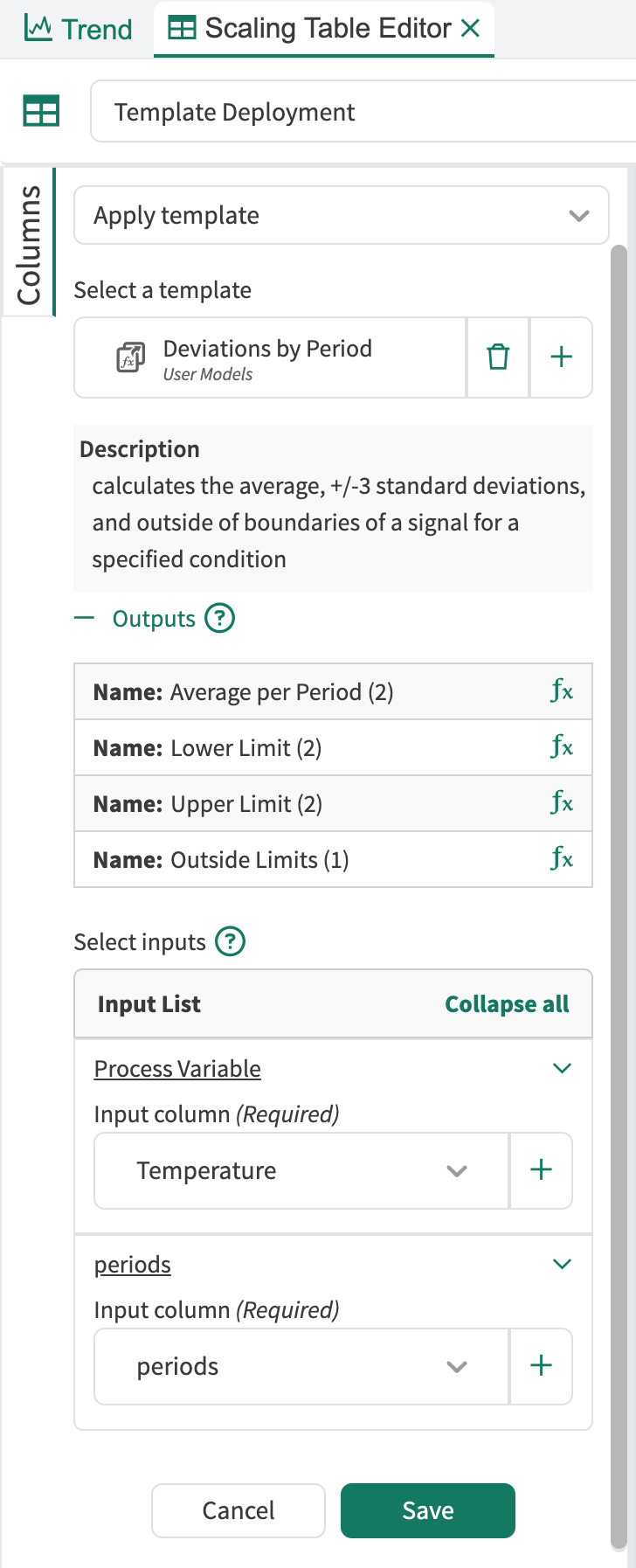
Apply Template to a Scaling Table
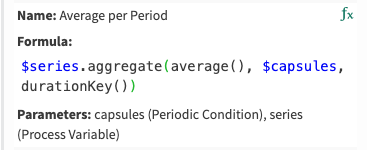
Outputs: when applied, all of the output columns are created and added to the Scaling Table. The fx icon can be used to show more formula details for each output.
Inputs: signals, scalars, or conditions required to execute the Template. By default, the columns in the Scaling Table are provided in the dropdown. To create new columns to search or calculate new input items, use the + icon.
After applying the Template, the outputs are generated and new columns are added to the Scaling Table. Because they were created by using a Template, the columns are grouped as a Template Application. This additional grouped information includes what Template controls the items. In Scaling Tables, the intermediates are hidden by default but can be revealed using the Column Visibility Tab.
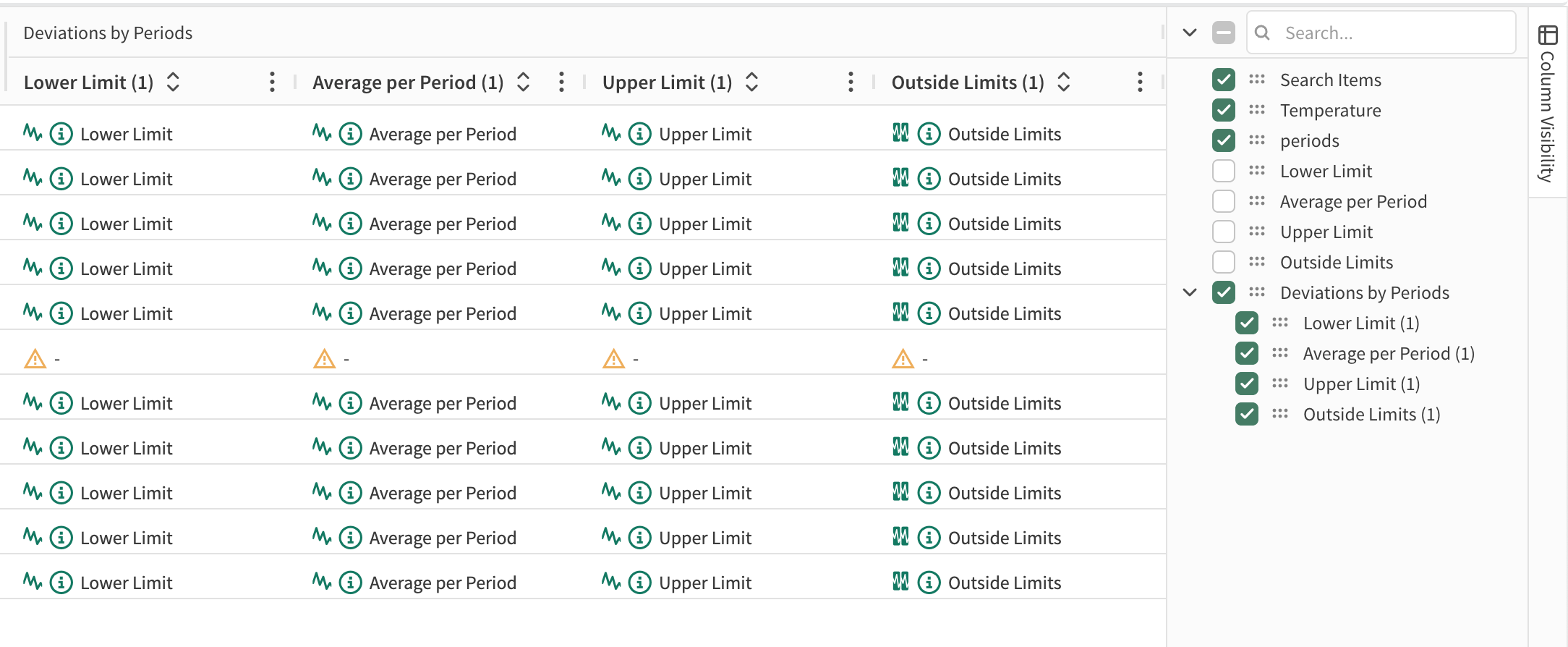
Result of Template Application in a Scaling Table
Because these new columns are Template controlled, they cannot be edited individually unless they are first retired from the Template. This is to provide governance for these items, an when the Template is edited or a new version is created, the instances (the items created by the Template) can be upgraded to accept the new changes.
Retiring a Template Instance
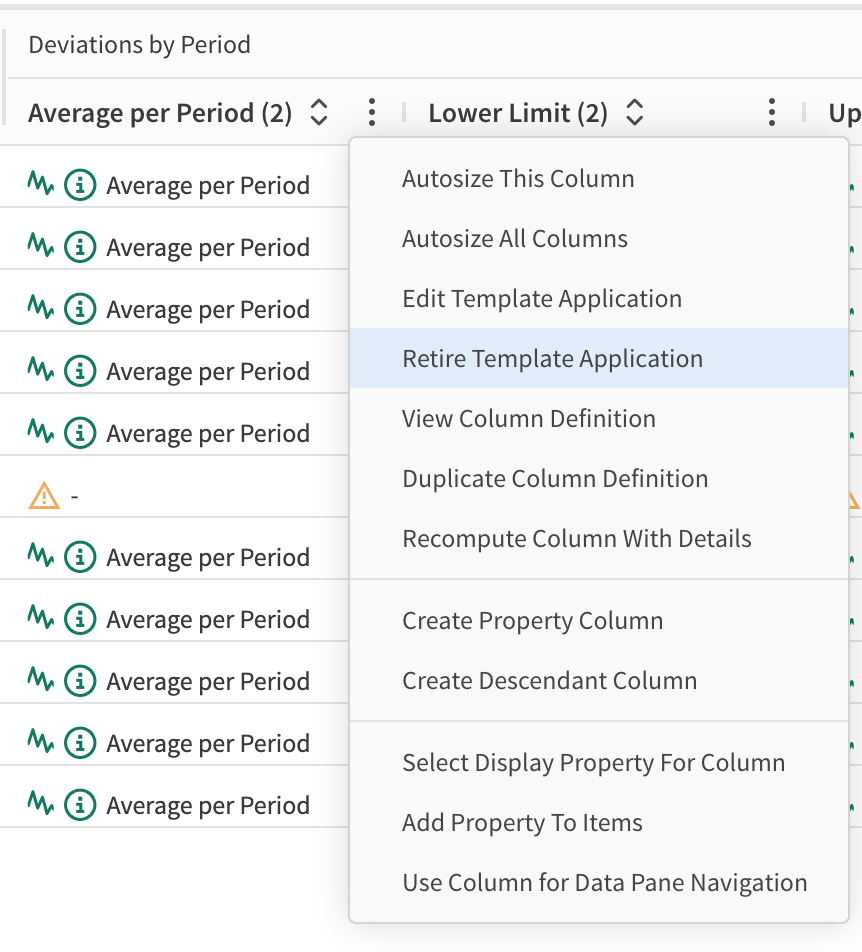
For some use cases, the Template may be used as a starting point for creating items, but some individual changes need to be made. This can be done by retiring the Template application. This action cannot be undone, and once the connection is broken between the items created and the Template, it cannot be reconnected without creating a new instance of the Template.
When retired, all of the columns that were associated with the Template are no longer attached or in sync and can be treated like an other Scaling Table column.
Placeholder section: Manual Overrides
Editing a Template
Just as everything in Seeq, developing a Template is an iterative process. A Template can be edited in a Scaling Table. When editing a Template, several changes can be made:
updating the name or description of the Template or any of the individual Template features (inputs, intermediates, outputs)
adding, deleting, or changing the output and intermediate calculations
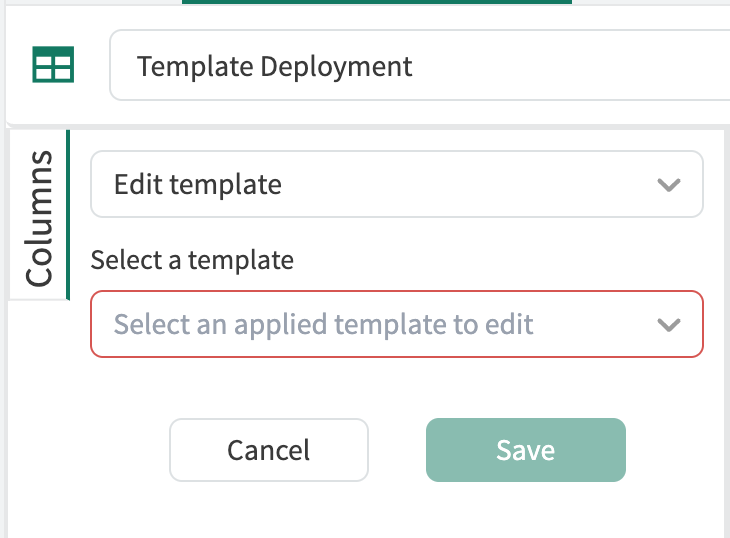
To edit in a Scaling Table, first deploy the Template to the scaling table. Then in the column actions, select Edit Template.
Updating Template & Feature Metadata
To change the names or descriptions of the Template itself or for any of the features, click in the text boxes and update the entries as necessary. For intermediates & outputs, clicking on the text of the name allow changes to be made.
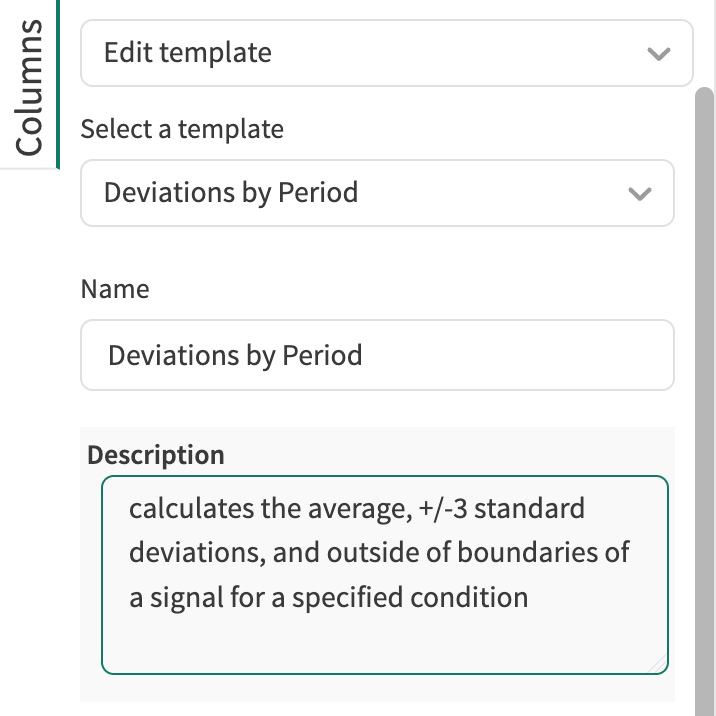
Updating Names and Descriptions
Deleting an Output
An output can be deleted by using the trash icon to the right of each entry. When an output is deleted, the inputs and intermediates that were required by the deleted output(s) will be removed from the Template as they are no longer required.
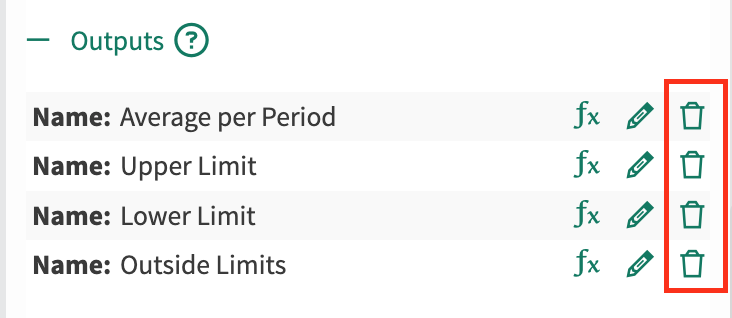
Deleting an output or intermediate feature
Editing an Output / Intermediate Calculation
To edit the calculations underlying an output or intermediate, first click the pencil icon next to the feature that needs to be changed.
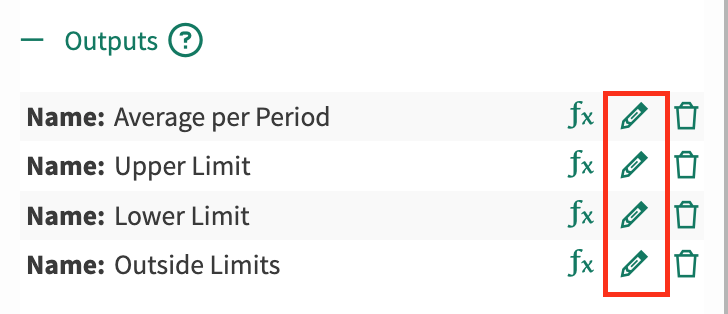
Editing an output or intermediate feature
The column editor will open for the output/intermediate being edited. The calculation can be changed, fallback rules can be added/reordered, and metadata can be updated. However, the column type must remain the same.
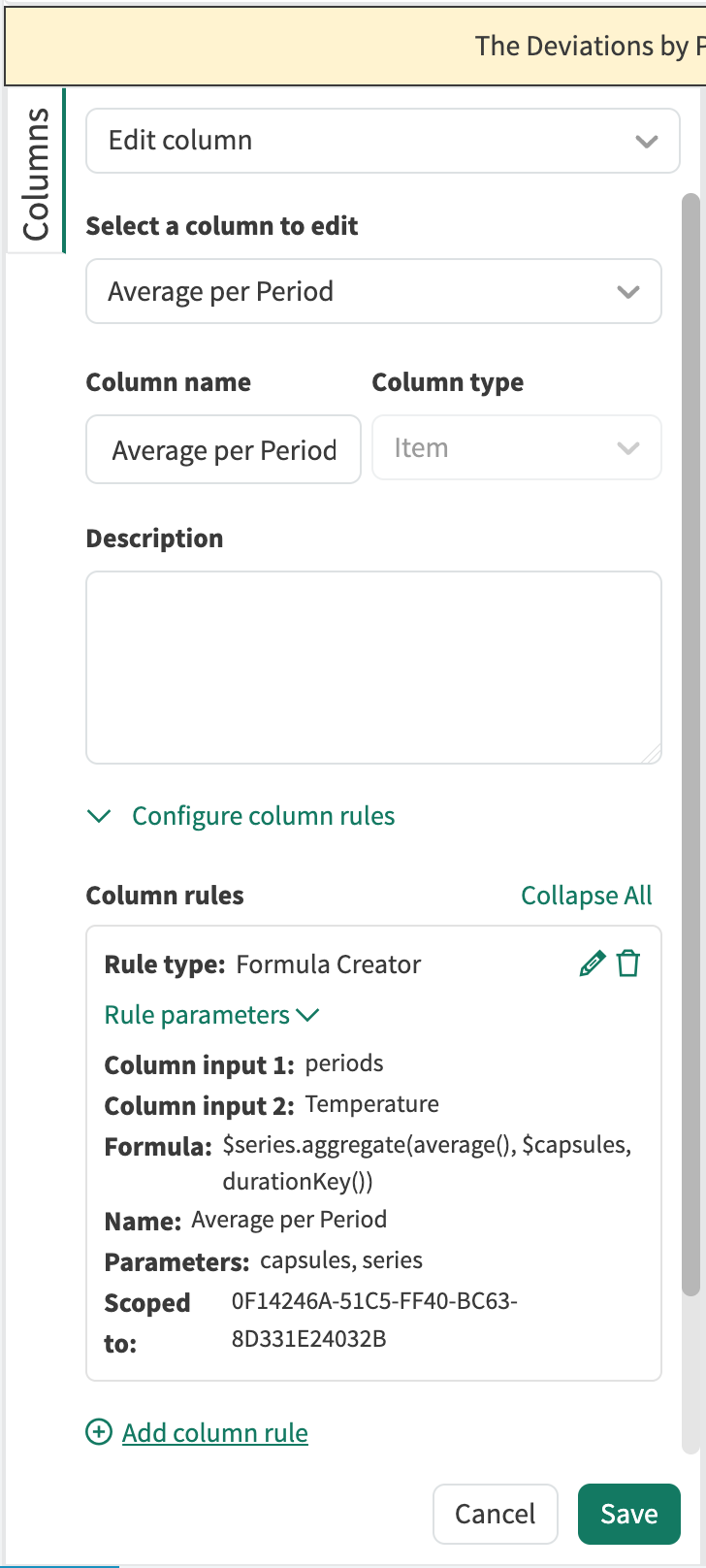
Adding an Output
To add a new output, a column can be used from the Scaling Table in the same way that was done during the creation step. Once again, the calculation hierarchy will be extracted, and new inputs and intermediates may be added.
If the newly added inputs or intermediates should reference existing features of the Template,
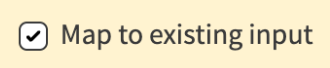
can be used so that duplicate features are not required.
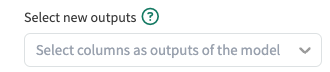
Area to include new calculated columns as part of the Template
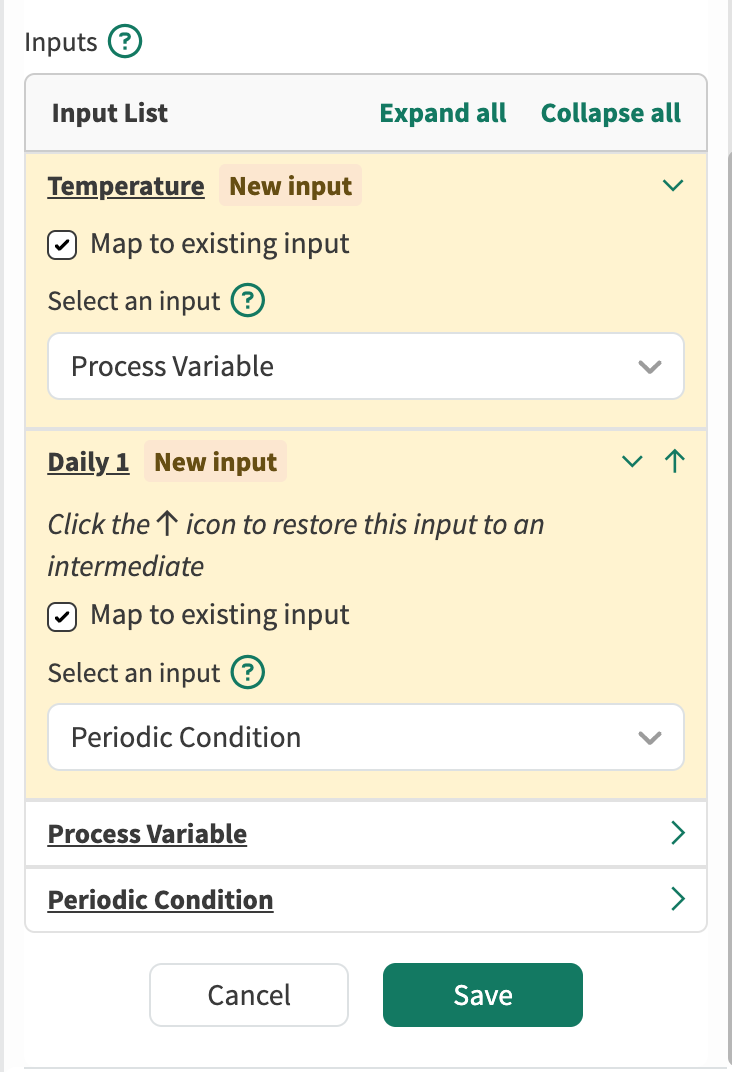
Mapping/managing new inputs
Moving an Intermediate to an Input or Output
During Template creation, the calculation hierarchy is crawled all the way back to a raw tag, not calculated items. All of the necessary intermediate calculations are added to the Template, but there may be times when one of those intermediates should actually be an input or output item. The arrows provided in the intermediates section allow the Template author / editor to shift these features to an input or an output.
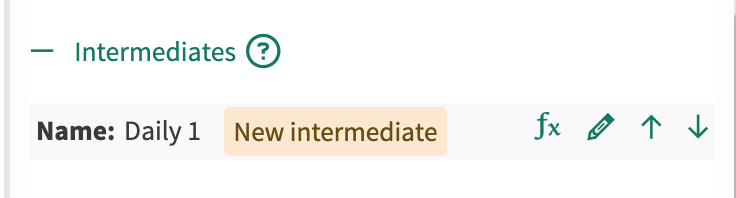
Arrows allow the editor to move an intermediate to an input or an output
If an intermediate is moved to an input, the required inputs to create it are removed. If an intermediate is moved to an output, there is no change to the required input list.